 Justin Capote MD
Me and My Approach
Background, areas of expertise, and approach to treatment
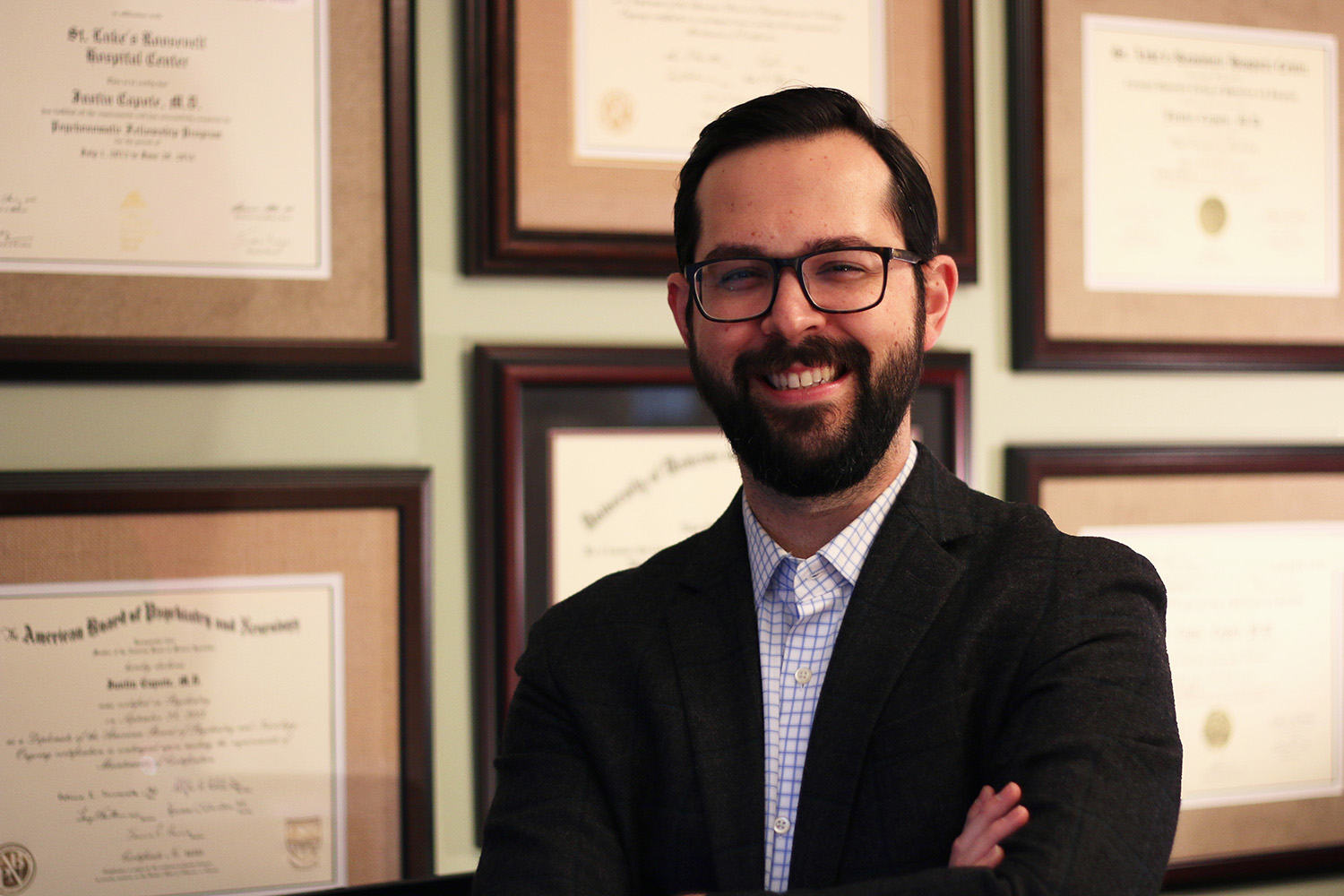
Justin Capote MD
Areas of Interest and Expertise
- Medication simplification and discontinuation
- Prescription and non-prescription drug abuse
- Medical comorbidities, loss, and bereavement
- Life transitions, advanced age, and generativity
- End of life and death anxiety
- Hospital and primary care collaboration
- Behavioral consequences of dementia and delirium
- Ethical withdrawal of care and appropriateness for hospice
- Evaluation of psychiatric disability
- Capacity assessments for the purposes of guardianship
- Common psychiatric issues like anxiety, depression, anger, trauma, and relationships
Born and raised in New York, I received my bachelor’s degree in psychology and biology from Rutgers University and my medical degree from the University of Medicine and Dentistry of New Jersey (now known as The Rutgers New Jersey Medical School). I completed my post-graduate training in the Mount Sinai hospital system on the Upper West Side of New York City and am currently double boarded in both Adult Psychiatry and Consultation-Liaison Psychiatry (formerly known as Psychosomatic Medicine).
I have worked in psychiatric emergency rooms, on both voluntary and involuntary psychiatric units, in outpatient clinics, on assertive community treatment teams, and as a hospital consultant on medical, surgical, and intensive care units. Working primarily in academic centers, I dedicated myself to the teaching and training of medical students and residents from a variety of specialties including psychiatry, internal medicine, family medicine, and surgery. I am currently a member of the Academy of Consultation-Liaison Psychiatry and have been recognized as one of New Jersey’s Best in Medicine by the American Health Council.
I have worked in psychiatric emergency rooms, on both voluntary and involuntary psychiatric units, in outpatient clinics, on assertive community treatment teams, and as a hospital consultant on medical, surgical, and intensive care units. Working primarily in academic centers, I dedicated myself to the teaching and training of medical students and residents from a variety of specialties including psychiatry, internal medicine, family medicine, and surgery. I am currently a member of the Academy of Consultation-Liaison Psychiatry and have been recognized as one of New Jersey’s Best in Medicine by the American Health Council.
If symptoms of anxiety and depression are impacting your ability to get through the day and meet your obligations at home and at work, then psychotropic medication may be of help.
I have found that psychotropic medications are their most helpful when used to target specific physical symptoms of emotional distress. For example, medications can dull the physical symptoms of anxiety, aid in sleep restoration over the short term, provide a boost of energy, improve concentration, stimulate appetite, and with physical symptoms under better control, a person can better meet their day to day needs. In this way, I see pharmacotherapy as a tool to speed the time to recovery. Equally important are tools like practicing healthy boundaries with others, investing in your life outside of work, moving your body regularly, prioritizing sleep, reevaluating inaccurate perspectives or unhelpful expectations, and holding ourselves accountable for our choices. A good community is incredibly important, and the most important relationship in that community is the one we have with ourselves. My approach in session is heavily informed by concepts from traditional Psychoanalysis, Attachment Theory, CBT and DBT, Internal Family Systems, and Relational Life Therapy.
I have found that psychotropic medications are their most helpful when used to target specific physical symptoms of emotional distress. For example, medications can dull the physical symptoms of anxiety, aid in sleep restoration over the short term, provide a boost of energy, improve concentration, stimulate appetite, and with physical symptoms under better control, a person can better meet their day to day needs. In this way, I see pharmacotherapy as a tool to speed the time to recovery. Equally important are tools like practicing healthy boundaries with others, investing in your life outside of work, moving your body regularly, prioritizing sleep, reevaluating inaccurate perspectives or unhelpful expectations, and holding ourselves accountable for our choices. A good community is incredibly important, and the most important relationship in that community is the one we have with ourselves. My approach in session is heavily informed by concepts from traditional Psychoanalysis, Attachment Theory, CBT and DBT, Internal Family Systems, and Relational Life Therapy.
Pharmacotherapy can be life saving. After debilitating symptoms are brought under control and progress is enjoyed, dosing strategies can be revisited. The ability to comfortably lower and even discontinue psychotropic medications when they have served their purpose or are no longer meeting one’s needs can be an integral part of recovery. However, tapers can be approached too quickly using relatively large dosage reductions (i.e. 25-50%) over short periods of time (i.e. every 1-2 weeks). Symptoms of withdrawal, like sleep disturbances, agitation, and emotional sensitivity, can be confused for symptoms of relapse. When tapers involve smaller reductions in dose (i.e. 10-15%) over longer periods of time (i.e. every 4-6 weeks) they tend to be better tolerated and are more likely to be successful. If you would like to speak with me about my approach to treatment prior to scheduling a consultation, there is no charge.